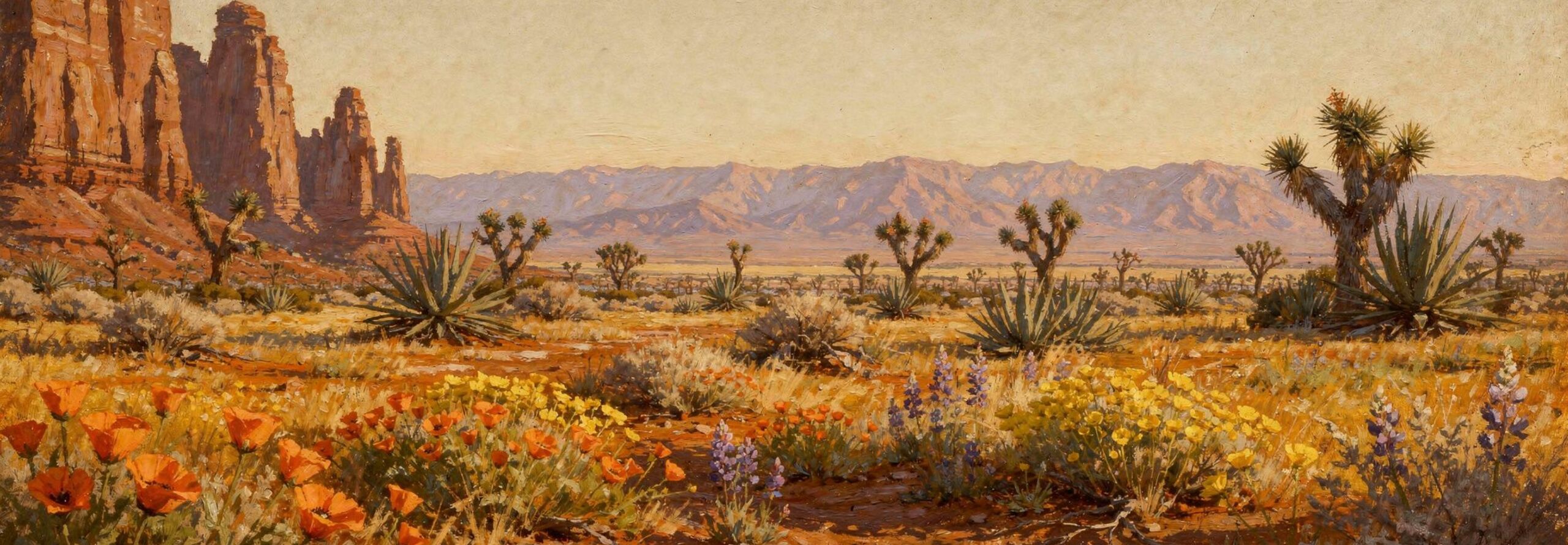
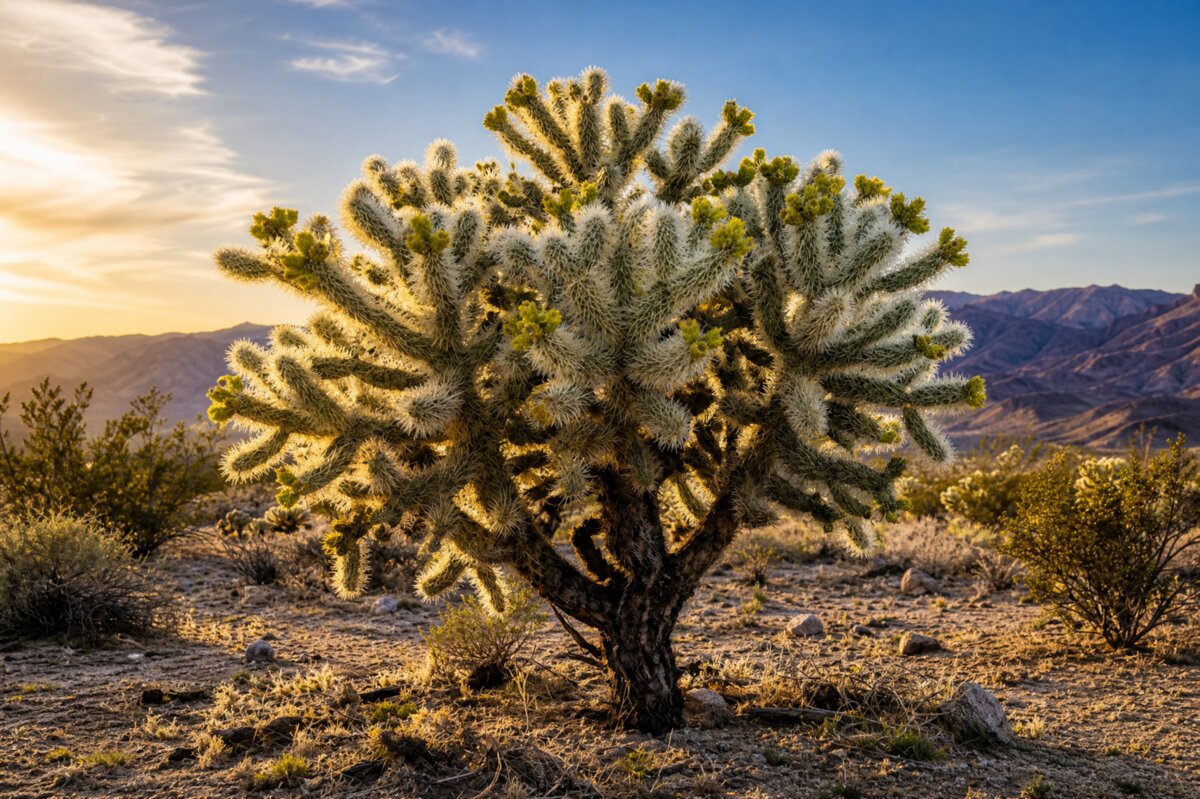
The name is a joke and the desert is in on it. Backlit at low sun, a teddy bear cholla looks genuinely soft — a golden, fuzzy, huggable thing — and that impression survives exactly as long as it takes to brush against one. The spines are barbed and sheathed, the segments release at the lightest contact, and what's now attached to your leg is a cutting the plant intends you to carry somewhere else and drop. Its seeds are mostly sterile; this is how it reproduces. Every cholla you see growing beside the trail got there because something walked past one and kept going.
Who They Are
Three to five feet of upright, segmented cactus on a dark woody trunk, with short cylindrical joints crowded at the top and completely sheathed in dense, silvery-gold spines. That spine cover is thick enough to obscure the green stem entirely, which does two things: it shades the plant from brutal sun, and it makes the whole cactus look, from a distance and especially backlit, deceptively fuzzy. Hence "teddy bear," a name that has to be understood as sarcasm. Each spine carries a detachable, papery sheath over a barbed tip, and the barbs are microscopically reversed — trivially easy to receive, memorably difficult to remove. Old plants stand surrounded by a litter ring of dropped joints, spines, and flowers.
Life in the Mojave
This cactus reproduces by hitchhiking. Its yellow-green flowers appear in spring, but the fruit that follows contains few or no viable seeds; instead, the stem segments themselves are the propagules. They detach at the slightest contact — a passing animal, a pant leg, sometimes a strong wind — ride along until they're dislodged, and then root where they land. The nickname "jumping cholla" comes from how instantaneous this feels; the segments do not actually jump, and the old tale that they're drawn to the moisture in flesh is a myth. Because segments don't travel far, cholla stands form dense clonal colonies, and a substantial "forest" may consist of only a few genetic individuals repeated over and over. Despite all this hostility, the plant is essential habitat: cactus wrens build nests deep inside the spines where almost no predator will follow, and desert woodrats deliberately harvest fallen joints to pile around their dens as fortification — while also eating the flesh for water, apparently without injury.
Why It Matters
The teddy bear cholla is a lesson in reading the desert honestly. It looks soft and it is not; it grows in forests and is often barely more than one plant; it makes flowers and seeds that mostly don't work, and thrives anyway. In ecological terms it's a shelter species — cactus wren nurseries, woodrat fortresses, cover for rodents, insects, and reptiles in country with very little cover to offer. And it is one of the defining sights of the Mojave's edge: the Cholla Cactus Garden in Joshua Tree National Park is several acres of them with a quarter-mile trail running straight through, which is as close as most people will ever want to get.