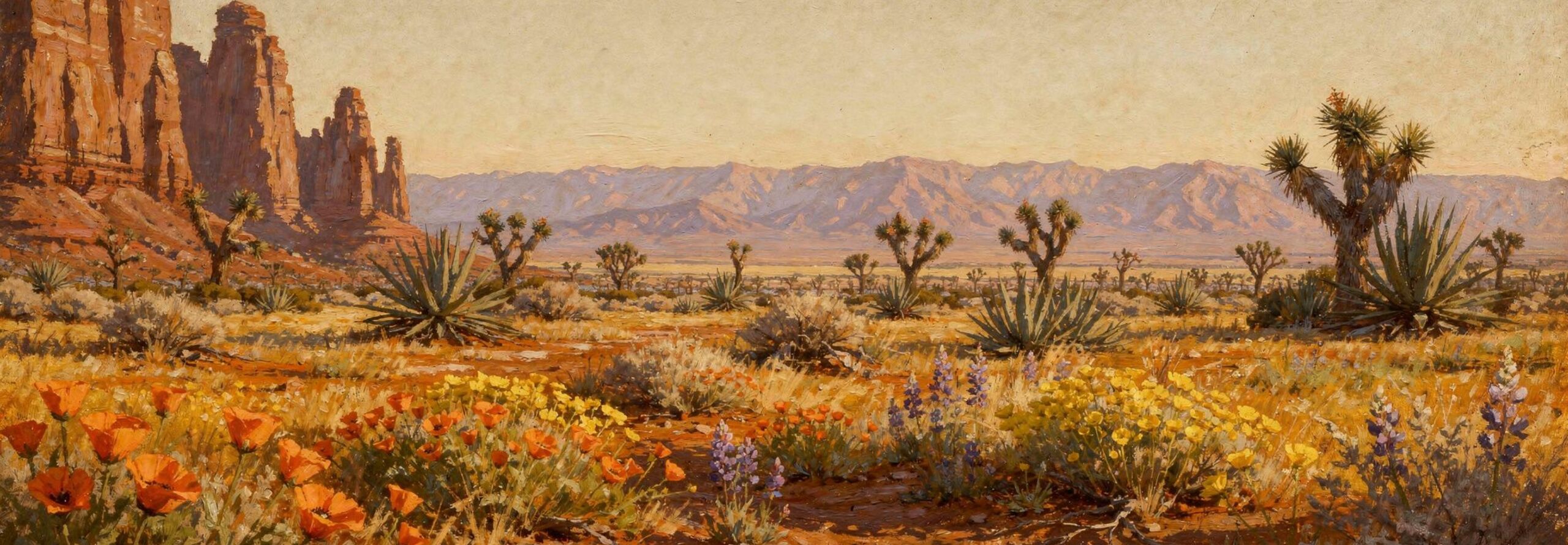
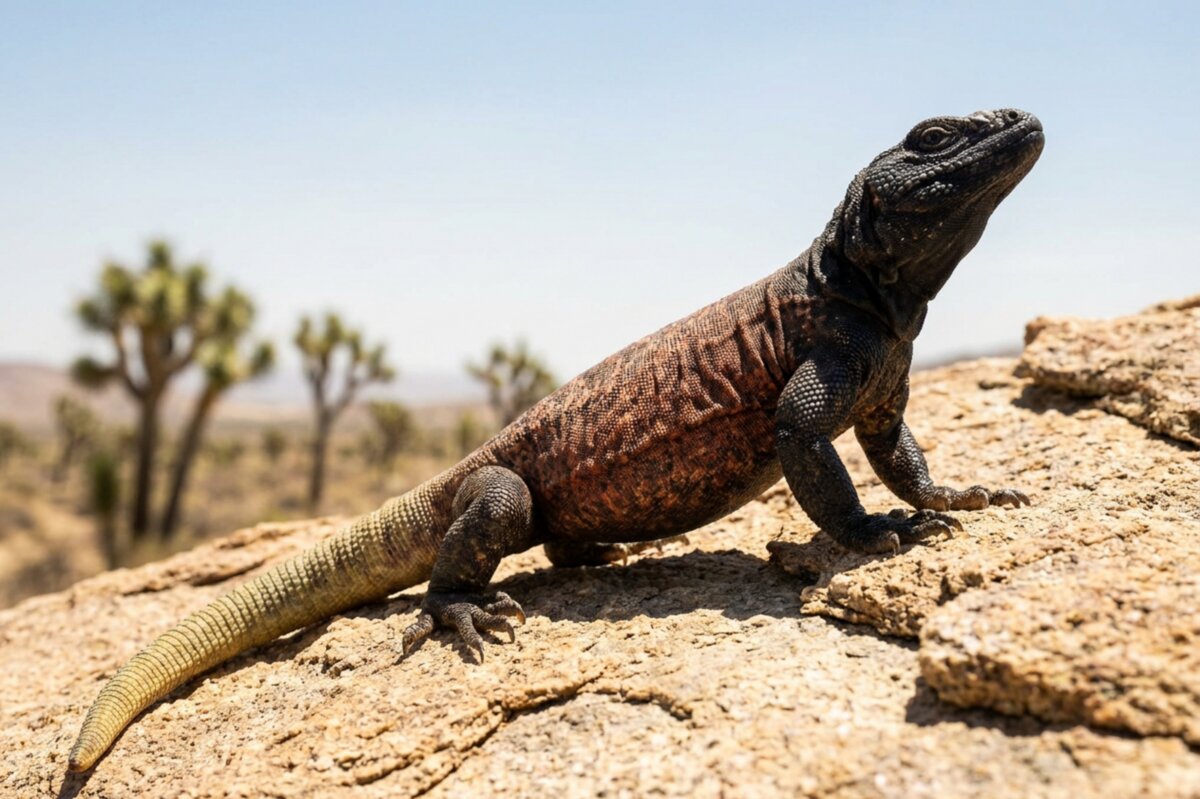
The chuckwalla has exactly one move and it is a good one. Threatened, it runs for the nearest crack in the rock, wriggles in, and then gulps air until its body swells against the stone — loose skin pulled tight, wedged in place, essentially unremovable. Then it waits you out. The rest of the time it's the most relaxed animal on the hillside: a fat, flat, mostly vegetarian lizard lying on a hot boulder eating creosote flowers, comfortable at temperatures that send everything else underground.
Who They Are
Up to twenty inches of wide, flat, unbothered lizard, built low to the rock. Adult males wear a striking two-tone scheme — black head, shoulders, and hips against a light tan speckled midbody — while females run brownish with scattered red spots, and juveniles show broad bands that fade with age. The most important feature is the least dramatic-looking one: loose, baggy folds of skin along the flanks and neck, apparently spare. They are not spare. Chuckwallas are diurnal and unapologetic sunbathers, spending mornings pressed flat against warm rock, communicating in push-ups, head-bobs, and open-mouthed gapes — territory disputes settled by posture, most of the time.
Life in the Mojave
This is a rock specialist and a vegetarian, an unusual combination in a desert. It eats leaves, flowers, and fruit — creosote is a staple — with the occasional insect, and takes most of its water from that plant material. It lives in boulder fields, outcrops, and old lava flows, because its entire survival strategy is architectural: when threatened, the chuckwalla runs to a crevice, squeezes in, and then gulps air with a pumping motion of its throat to inflate its lungs, swelling its body and jamming those loose skin folds tight against the rock. A hawk or a coyote gets a lizard it cannot extract. It's active at temperatures up to about 102°F, brumates through the cold months, and emerges around February to start the whole cycle again.
Why It Matters
The chuckwalla is one of the Mojave's few large herbivorous reptiles — a plant-eater in a land of insect- and meat-eaters, moving seeds and browsing shrubs on rocky slopes where little else of its size can live. It has also been part of human life here for a long time: the Timbisha Shoshone of the Death Valley region hunted chuckwallas as a traditional food, and did it by beating the inflation trick directly — working a barbed hook into the crevice so the wedged lizard could be drawn out, a practice documented in the ethnographic literature complete with illustrations of the hook itself. That's a detail worth sitting with. The animal's one perfect defense had a counter, and the people who knew this desert intimately — the Timbisha Shoshone — were the ones who found it.