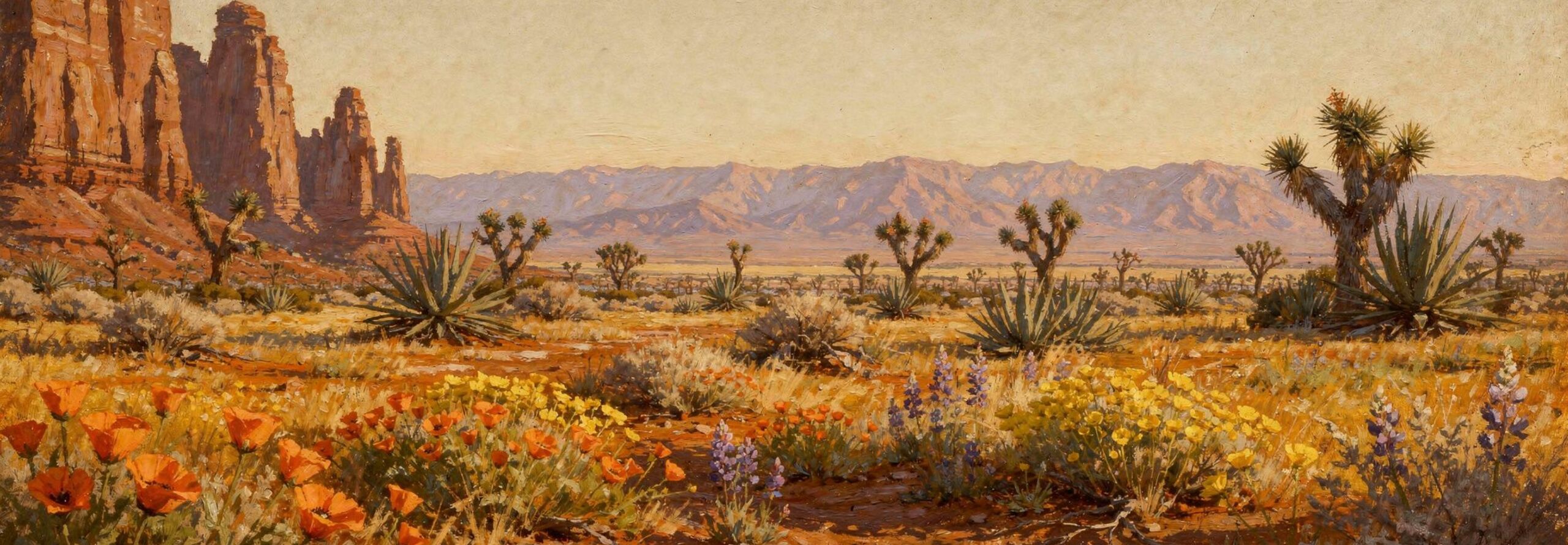
The coyote has been here longer than the desert has been a desert, and it has adjusted every single time the desert changed its mind. Ice Age coyotes were nearly wolf-sized and hunted alongside sabertooths; when the big prey vanished, coyotes got smaller, got smarter, and got on with it. That's the whole story of this animal — not strength, adaptability. Listen at dusk and you'll hear what sounds like a dozen of them out past the wash. It's usually two.
Who They Are
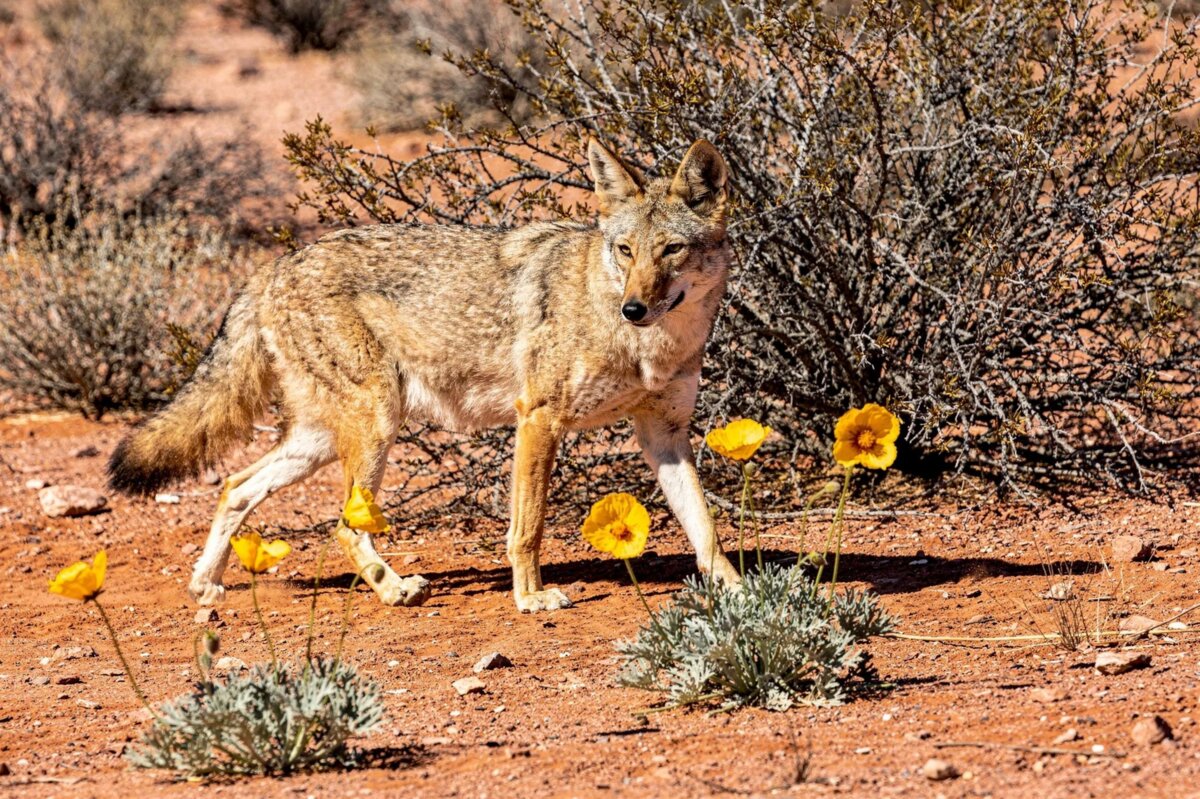
Forty-ish pounds of grayish-brown practicality, with tall ears, a narrow muzzle, and a black-tipped tail carried low — that dropped tail is the giveaway when people mistake one for a stray dog. Coyotes move at an efficient trot that eats miles, hunt mostly at dawn and dusk to skip the worst heat, and watch everything. The voice is the signature: yips, barks, and rising howls used to mark territory, coordinate, and regroup, layered in a way that makes two animals sound like a crowd. If the Mojave has a soundtrack after sundown, this is it.
Life in the Mojave
The coyote's advantage isn't strength or speed; it's that nothing is off the menu. Jackrabbits and rodents, lizards, insects, carrion, and a surprising amount of fruit — mesquite pods, cactus fruit, even the bitter desert melons that other animals refuse. That last habit matters more than it sounds: carnivores like coyotes are documented seed dispersers, carrying and depositing viable seeds well away from the parent plant. Water gets solved the same practical way — pulled from food, from dug seeps, from stock tanks, from swimming pools where the desert has been paved. In folklore across the Southwest the coyote is the trickster, and the ecology backs the reputation: this is an animal that solves problems.
Why It Matters
Where wolves, bears, and mountain lions have been removed, the coyote has become the apex predator by default, holding down rodent and rabbit populations across most of the continent — and quietly replanting some of it. Its deep-time story is the best argument for keeping it: Ice Age coyotes were bigger and more powerfully built, hunting large prey beside dire wolves and sabertooths. When the megafauna died out and the competition disappeared, coyotes reorganized around smaller prey and a more omnivorous life, and within roughly a thousand years they had become the animal we know. Everything that shared that landscape and refused to change is gone. The coyote changed, and it is still out past the wash, watching.