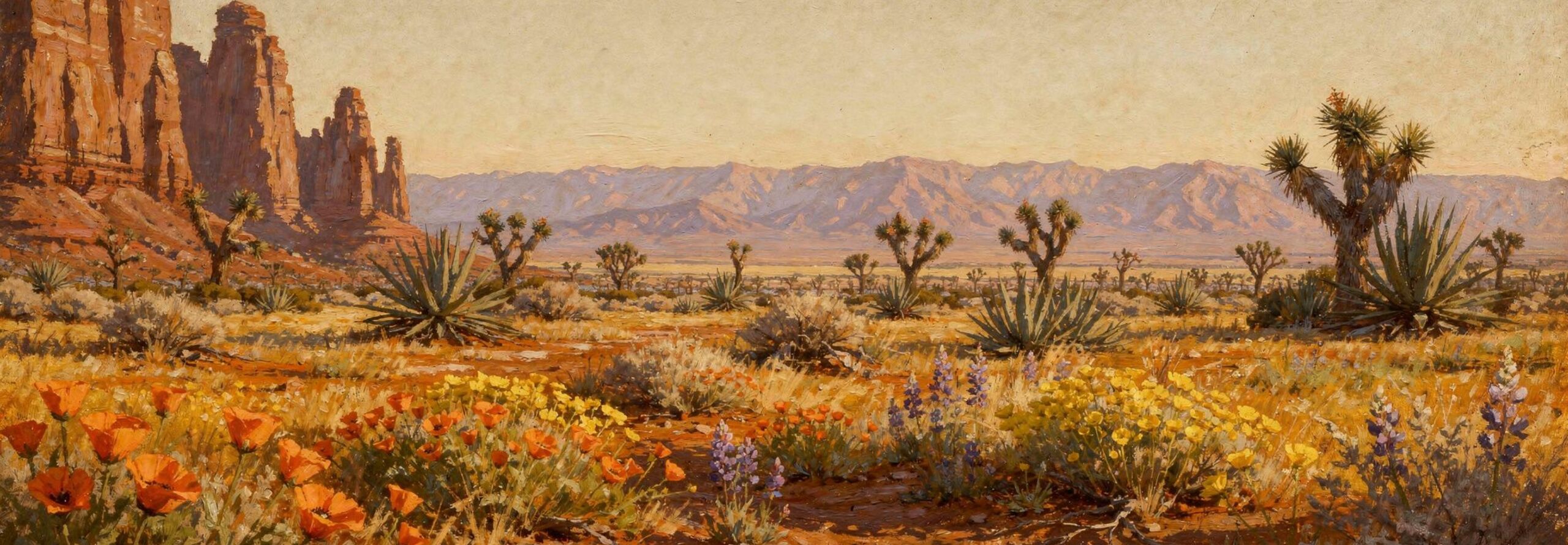
Look up. That's usually where they are — a band of desert bighorn picking along a ledge that has no business holding anything that weighs two hundred pounds. The hooves do it: hard rims for edges, soft centers for grip, climbing gear that came standard. They can go long stretches without drinking, taking water from the plants they browse, and they use sheer terrain as a defense, living where mountain lions struggle to follow. Their ancestors walked to this desert from Asia across the Bering Land Bridge. Nevada made them the state animal in 1973, which is one of the few times a state symbol was chosen for being stubborn.
Who They Are
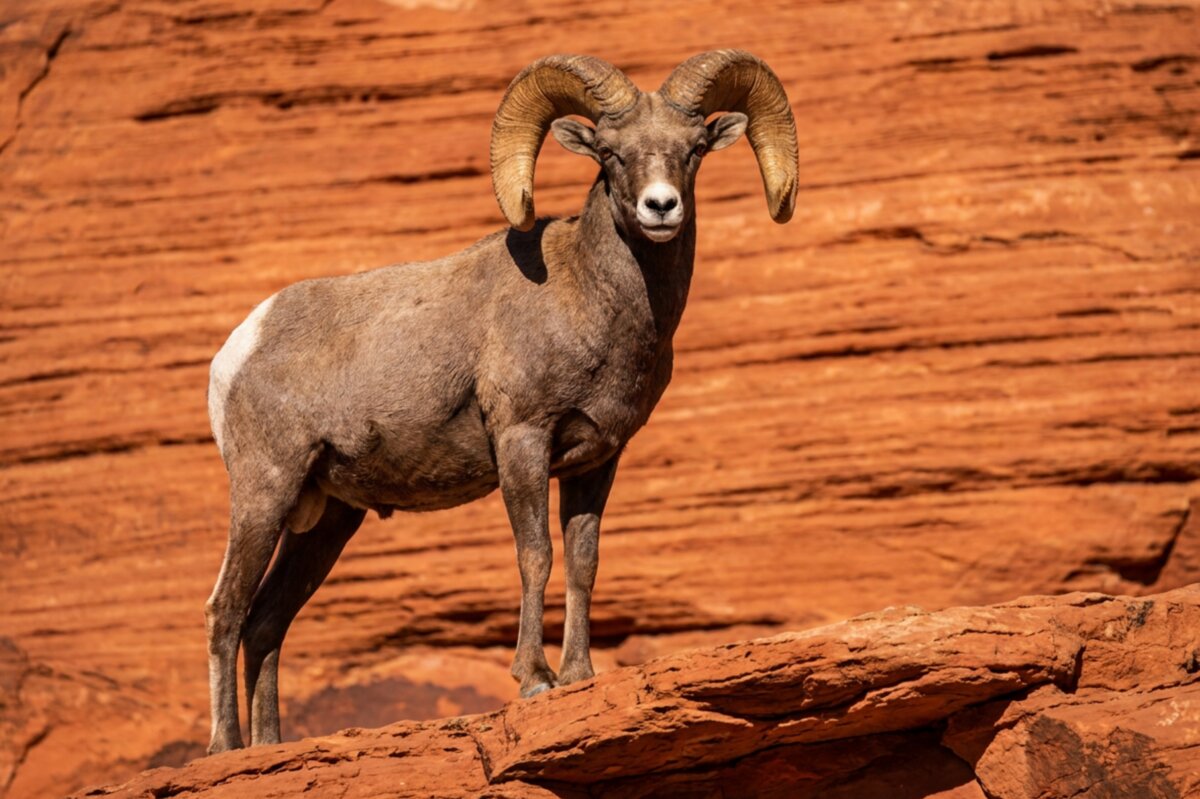
Stocky, buff-gray, and built for a hard country. A ram stands three feet at the shoulder, tops two hundred pounds, and carries horns that curl in a heavy spiral and grow throughout life — never shed, ring by ring. Ewes carry horns too, slimmer and shorter. Desert bighorn are smaller and paler than their Rocky Mountain cousins, an adaptation to a leaner, hotter range. The defining trait is where they stand: high, steep, and exposed on ledges and cliff faces that make no sense until you understand they are a defensive position.
Life in the Mojave
Water and terrain define everything. Bighorn can go extended periods without drinking, pulling moisture from tough desert plants like mesquite and catclaw that most grazers can't process. In the hottest months they still need standing water, which makes desert springs a matter of survival for a herd. Their hooves do the rest: split, hard-edged, with a soft gripping center built for bare rock at speed. Pair that with extraordinary long-range eyesight and the equation is simple: spot the threat early, then go somewhere it cannot follow. Lambs are the vulnerability. Coyotes take them where they can, and mountain lions are the only predator sure-footed enough to follow bighorn into the high country.
Why It Matters
Nevada made the desert bighorn its state animal in 1973 — the driest, most mountainous state picking the animal that survived both those facts. It was a meaningful moment: populations across the Southwest had declined sharply, and the decades since have been a mostly successful recovery involving water development, disease management, and moving sheep between isolated ranges. Death Valley research shows that connected populations able to exchange genes are far more resilient than isolated ones — the corridors between ranges matter as much as the ranges themselves. The deepest fact on the mountain: their ancestors crossed the Bering Land Bridge from Asia, walked south across a continent, and stopped here. They've been holding the high ground ever since.