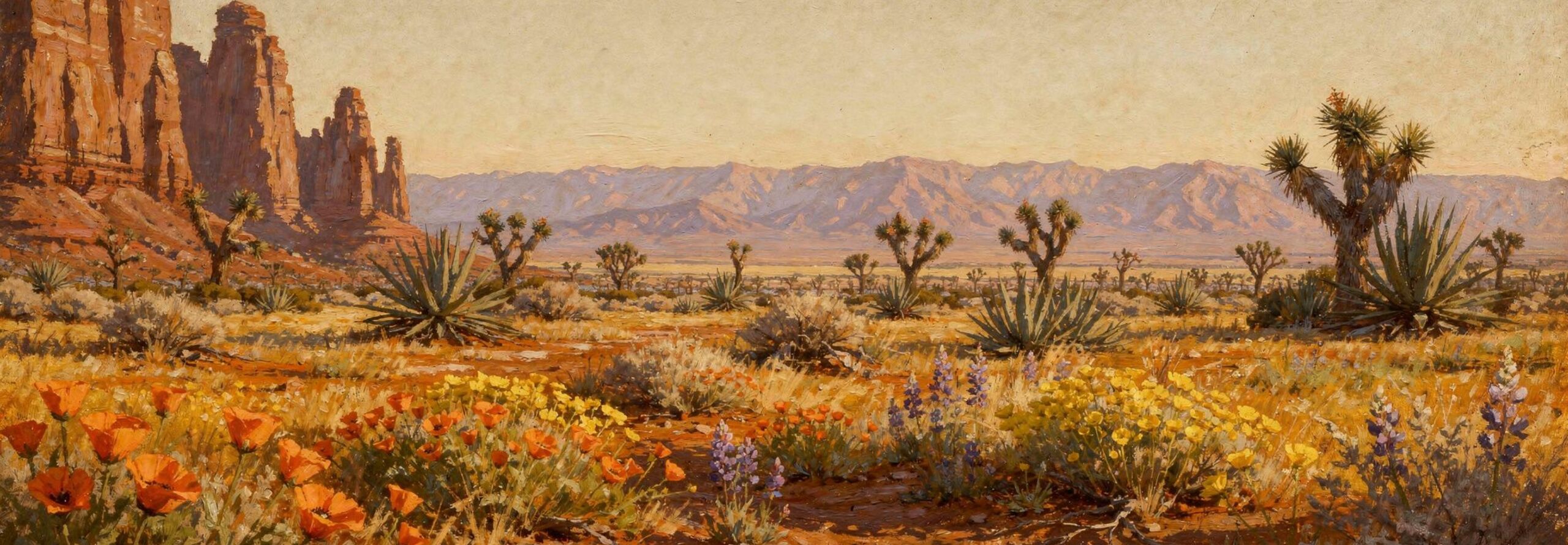
The desert tortoise has been keeping the same schedule for millions of years: wait out the heat, wait out the cold, come up when the wildflowers do. It spends nearly its whole life in a burrow it dug itself — and rents the rest of the place out to owls, snakes, and anyone else who needs shade. Here's the part nobody thanks it for: every wildflower meal gets replanted on the way out, seeds scattered across the Mojave one slow lap at a time. The desert's oldest landlord is also its gardener.
Who They Are
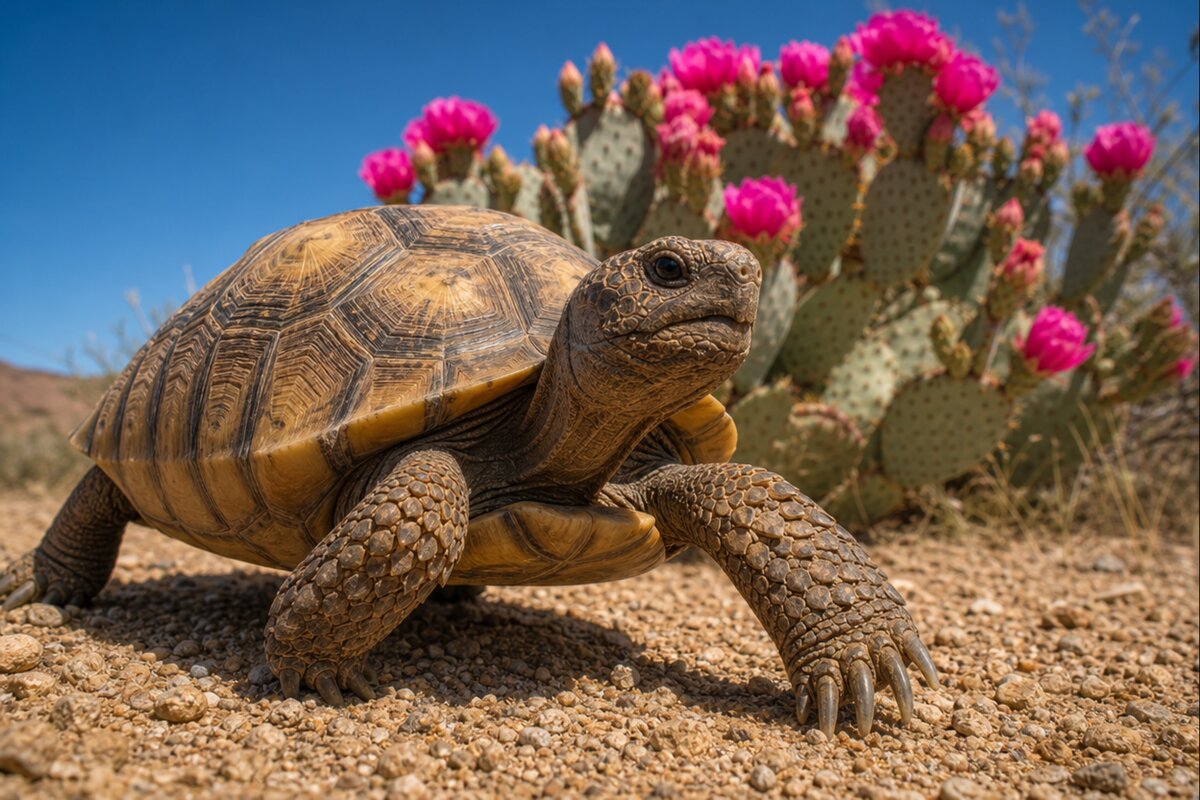
The desert tortoise is the largest land turtle in the United States, and it wears the job plainly: a high-domed shell in weathered tan and brown, stout elephant-round back legs, and flattened, armored forelimbs shaped like garden spades — because that's what they are. It moves with the unhurried confidence of something that has never once needed to be anywhere quickly, cropping grasses and wildflowers with a toothless beak. Males carry an extended horn of shell under the chin, used for shoving matches over territory and mates. If you see one at all, it will probably be near a burrow mouth in spring — because for up to 95% of its life, this animal is underground.
Life in the Mojave
The burrow is the whole strategy. Several feet down, temperatures level out and humidity holds, and the tortoise waits there through summer's heat and winter's cold, emerging when rain brings the desert briefly to life. After a good storm it drinks deeply and banks the surplus, storing water it can draw on through the long dry months — a living canteen. And because well-built real estate is the scarcest thing in a desert, the tortoise's burrows fill up with tenants: burrowing owls, Gila monsters, rattlesnakes, woodrats, and dozens of other species have been documented moving into tortoise burrows. Biologists call it a keystone species and an ecosystem engineer. The tenants, presumably, call it the landlord.
Why It Matters
Pull the tortoise out of the Mojave and you don't lose one species — you lose the housing stock, plus a gardener that spreads native seeds with every meal. And it is being pulled out: the Mojave desert tortoise was listed as federally threatened on April 2, 1990, after severe declines, and populations have kept falling since — a tortoise sighting that was ordinary in the 1950s is a lucky day now. This is an animal that watched the Mojave become a desert; its lineage was digging burrows here tens of millions of years before there was anyone to name it. It has outlasted everything so far except us — and that part is still being decided.