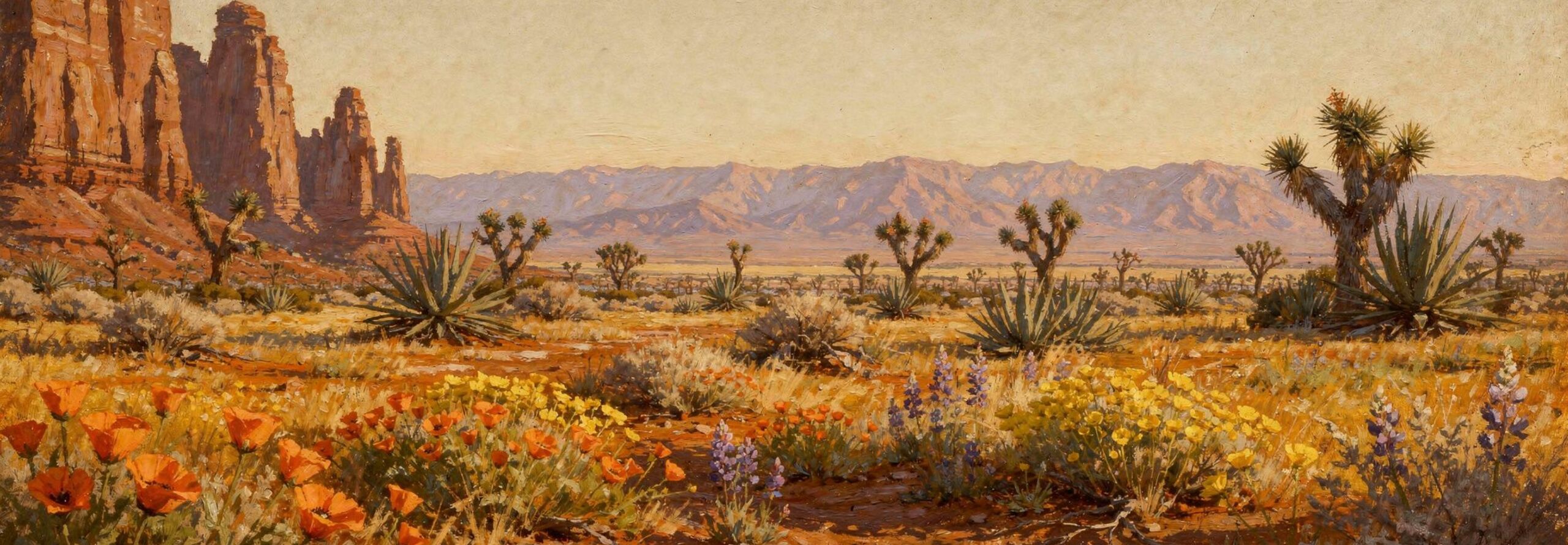
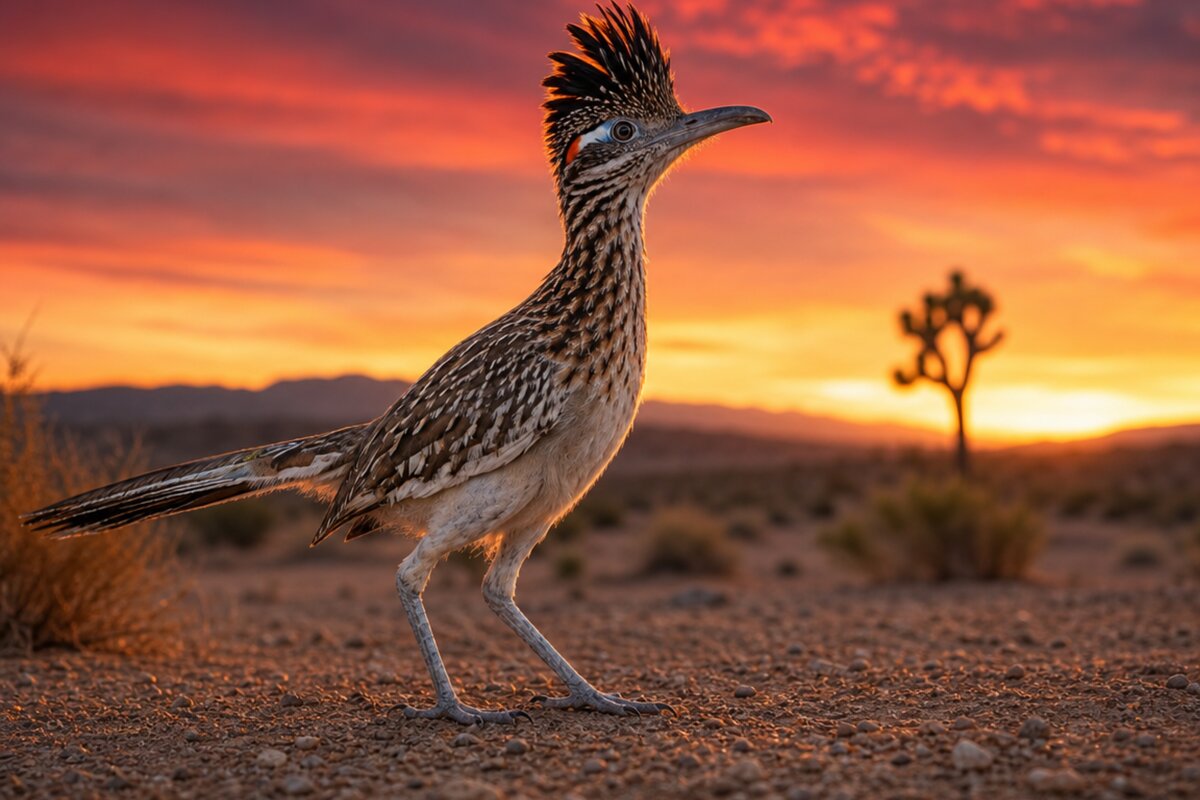
Somewhere out past the creosote, a bird is doing twenty miles an hour on foot and not the least bit sorry about it. The greater roadrunner is a cuckoo that mostly gave up flying because, frankly, the ground was working out fine. It patrols the Mojave in permanent pairs that may stay together for life, trading soft, dove-like coos and a dry clack of the bill. Fastest bird you'll ever hear before you see.
Who They Are
Two feet of attitude from sturdy bill to white-tipped tail, the greater roadrunner is the largest cuckoo in the Americas — and the least interested in behaving like one. Where its relatives keep to the trees, the roadrunner took to the ground and stayed there, sprinting past 20 miles per hour with its lean body held flat, head and tail level with the horizon, long tail swinging like a rudder through every turn. The mottled brown-and-tan plumage disappears against dusty scrub; the shaggy blue-black crest rises and falls as a signal flag. It can fly — briefly, low, and clearly under protest.
Life in the Mojave
Nearly everything about this bird is a desert workaround. It gets most of its water from its prey — lizards, mice, scorpions, large insects, and famously, rattlesnakes, which it provokes into striking, seizes by the head, and whips against the ground. A special gland sheds concentrated salt so precious water isn't wasted. Cold desert mornings get solved with the cheapest trick in the book: the roadrunner turns its back to the sunrise, raises its feathers, and lets a patch of black skin between its wings soak up heat like a solar panel — sometimes for hours. It lives in year-round pairs on a defended territory, and courting males arrive with a lizard dangling from the bill as a gift. For all its speed, it isn't the top of anything: hawks take roadrunners from above, and coyotes — real ones, which are more than twice as fast — occasionally catch one. The cartoon had it backwards.
Why It Matters
The roadrunner is one of the Mojave's working predators, keeping lizards, rodents, and venomous invertebrates in check while feeding the hawks and coyotes above it. It has been running this ground since before the desert was a desert — Ice Age fossils include a larger, extinct form of the same bird. Its distinctive X-shaped track, two toes forward and two back, gives no hint of direction — which feels about right for a bird that has always been a little ahead of everyone.