← Back to the Mojave
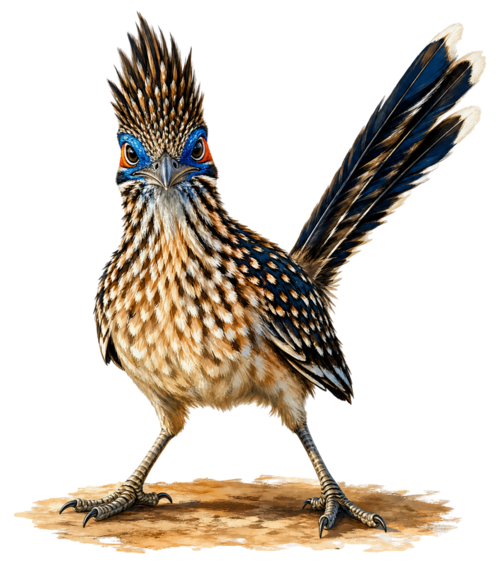
The Grumpy Roadrunner, giving you a hard look.
Before You Go

The desert is serious. Here's what you need to know.

The Mojave is one of the most beautiful places on Earth. It will also kill you if you're not paying attention. That's not a threat — it's just physics. Heat, dehydration, venomous animals, sharp plants. All of them have rules. Learn them before you need them. — G.R.

Water & Heat

This is the one that gets people. More desert emergencies come from heat and dehydration than everything else on this page combined.

How much water: At least one gallon per day — more if you're hiking. That's the NPS minimum. In summer heat, carry more than you think you need and drink before you're thirsty.

Signs of heat exhaustion:

  • Heavy sweating, pale skin
  • Nausea, headache, dizziness
  • Weakness, muscle cramps
  • Fast heartbeat

What to do: Move to shade immediately. Rest. Drink water slowly — not all at once. Wet skin and fan if possible. If symptoms don't improve within 30 minutes, call 911.

Signs of heat stroke — this is an emergency:

  • Confusion, slurred speech, disorientation
  • Hot, dry skin (sweating may stop)
  • Rapid pulse
  • Loss of consciousness

What to do: Call 911 immediately. Move the person to shade. Cool them down by any means available — wet clothing, water on skin, fanning. Do not give water to someone who is confused or unconscious. Heat stroke can be fatal within minutes.

General rules:

  • Do not hike at low elevations after 10am in summer — NPS Death Valley guidance
  • Never hike alone in summer heat
  • Tell someone where you're going and when you expect to be back
  • Dashboard temperatures in a car parked in the Mojave sun can exceed 150°F within an hour. Never leave children, pets, or anyone in a parked car.

More detail: NPS Death Valley — Beat the Heat · Mayo Clinic — Heat stroke first aid · American Hiking Society — Hot Weather Hiking

↑ Back to top

Rattlesnakes

The Mojave has several rattlesnake species, including the Mojave rattlesnake (Crotalus scutulatus) — one of the most venomous snakes in North America. Most bites happen when people reach into places they can't see or step without looking.

Avoid a bite:

  • Watch where you step and where you put your hands — always look before reaching under rocks, logs, or into crevices
  • Wear closed-toe shoes and long pants on trail
  • If you see a rattlesnake, give it at least six feet and go around — they are not aggressive unless threatened
  • Rattlesnakes are most active at dawn, dusk, and at night in summer

If someone is bitten:

  • Call 911 immediately — do not wait for symptoms
  • Keep the person calm and still — movement speeds venom spread
  • Remove rings, watches, and tight clothing from the bitten limb before swelling starts
  • Keep the bitten limb at about heart level
  • Wash the bite gently with soap and water if available

Do NOT:

  • Cut the wound
  • Suck out the venom — it doesn't work and can cause infection
  • Apply a tourniquet — this can cause tissue death and amputation
  • Apply ice
  • Give alcohol or caffeine
  • Try to catch or kill the snake — a dead snake can still bite reflexively. Take a photo from a safe distance if possible.

Antivenom is available at hospital emergency rooms and is most effective when given early.

More detail: Poison Control — Rattlesnake bites · Mayo Clinic — Snakebite first aid · UC Davis Health · NPS Joshua Tree — Venomous animals

↑ Back to top

Scorpions

The Mojave is home to the Arizona bark scorpion (Centruroides sculpturatus) — the most venomous scorpion in the United States. It's small, pale tan, and likes to hide in shoes, clothing, towels, and under rocks. Shake out footwear before putting it on. Always.

Most stings: Intense pain and burning at the site, numbness and tingling. Uncomfortable but not life-threatening for healthy adults.

Immediate first aid:

  • Stay calm — elevated heart rate speeds venom circulation
  • Wash the sting site with soap and water
  • Apply a cool compress (not ice directly on skin)
  • Elevate the affected limb to about heart level
  • Remove jewelry or tight items near the sting site in case of swelling
  • Over-the-counter pain reliever can help

Call 911 or go to the ER if:

  • Difficulty breathing
  • Muscle twitching or uncontrolled movements
  • Trouble swallowing or drooling
  • Confusion, vision problems
  • Severe vomiting
  • The victim is a child, elderly, or has a compromised immune system

Children are most at risk — smaller body mass means venom hits harder. Antivenom (Anascorp) exists and works. Get to an ER.

At camp and at night:

  • Use a UV blacklight — scorpions fluoresce bright green under ultraviolet, making them easy to spot in the dark
  • Check sleeping bags, clothing, and shoes before use
  • Don't leave clothing or towels on the ground overnight
  • Keep tents zipped all the way to the top when you can — it makes it harder for anything to get in at ground level
  • And a good tent shake never hurt anyone. Better to dislodge whatever's crawling up the side before you're inside with it

More detail: Poison Control — Scorpions · Arizona Poison Control — Bark Scorpion · Mayo Clinic — Scorpion stings

↑ Back to top

Cactus Spines

The teddy bear cholla (Cylindropuntia bigelovii) is the main one to know. Its segments detach at the lightest contact and the barbed spines are extremely difficult to remove. It does not jump — but it doesn't need to.

Do not pull spines out with your fingers — the barbs will transfer to your hand.

For cholla segments:

  • Use two sticks, two combs, or any two rigid objects as chopsticks to flick the segment away from skin — don't grab it
  • Once the segment is off, remove remaining spines with fine-tipped tweezers
  • Pull each spine out at the same angle it went in — pulling at an opposing angle snaps the spine

For large visible spines (prickly pear, etc.):

  • Fine-tipped tweezers, good light
  • Pull at the same angle the spine entered
  • If a spine breaks off below the skin surface, don't dig for it — shallow fragments often work their way out on their own

For tiny glochids (the nearly invisible hair-like spines on prickly pear):

  • Don't rub or squeeze — this pushes them deeper
  • Adhesive tape removes only about 28–30% — a useful first step, not a solution
  • White school glue (Elmer's) is more effective: spread a thin layer, let dry fully (~35 minutes), peel off in one piece
  • Tweezers first, then glue — this combination removes up to 95% of spines

After removal:

  • Wash the area with soap and water
  • Apply antibiotic ointment
  • Watch for increasing redness, swelling, or pus in the days following — cactus spines can introduce infection deep into skin tissue. Granulomas (firm inflamed lumps at the puncture site) can persist for weeks and may need medical attention.

More detail: Poison Control · PubMed — Removal of cactus spines (Martinez et al.) · NPS Cholla Cactus Garden

↑ Back to top

Tarantulas

Desert tarantulas look alarming. They are mostly harmless.

A tarantula bite is roughly equivalent to a bee sting — painful and localized, not dangerous to healthy adults. They are non-aggressive and will only bite if handled or cornered. Leave them alone and they will leave you alone.

If bitten:

  • Wash the bite with soap and water
  • Apply a cool compress
  • Over-the-counter pain reliever for discomfort
  • Seek medical care if you have signs of an allergic reaction: hives, swelling beyond the bite site, difficulty breathing

The hair is the bigger hazard: Disturbed tarantulas flick tiny urticating hairs from their abdomen. These cause skin irritation and are particularly nasty if they get in eyes. Don't handle tarantulas, don't pick them up, don't crowd them with a camera.

More detail: Poison Control — Tarantulas

↑ Back to top

Gila Monsters

Slow, armored, and genuinely not interested in you. Bites are rare because the animal is slow and avoidant — most happen when people try to handle them.

  • Do not pick up, handle, or provoke a Gila monster
  • They are protected by state law throughout the Mojave — it is illegal to handle, harass, or possess one in Arizona, Nevada, California, and Utah
  • If bitten: seek medical attention. The bite is painful and the animal may hold on. Use a stick placed between the bite and the back of the jaw to pry it free — do not forcibly pull. Irrigate the wound thoroughly with water. Get to an ER.

More detail: Arizona Poison Control — Gila Monster · Wilderness Medical Society — Gila Bite

↑ Back to top

Flash Floods

The Mojave can receive intense localized rain you may not see or hear. Water travels fast through dry washes and canyons — a wall of water can arrive from a storm miles away with no warning.

  • Never camp in a wash or dry riverbed
  • If you hear a roaring sound in a canyon, move to high ground immediately — don't wait to see what it is
  • Check weather forecasts before entering canyons or narrow washes, including conditions upstream
  • Flash floods can occur even on clear sunny days at your location

More detail: NOAA — Flash Flood Safety · NPS Death Valley — Flash floods · NPS Joshua Tree — Flood safety

↑ Back to top

Vehicle Safety

The Mojave is one of the most common places in the country to have car trouble — and one of the worst places to be unprepared for it. Scorching pavement, long distances between services, and summer heat that peaks well above 100°F mean that a blowout or overheated engine can turn into a survival situation faster than you'd expect.

Know what to do before it happens. The physics don't care that you're running late. — G.R.

Blown Tire

Don't panic and don't hit the brakes. Slamming the brakes after a blowout is the most dangerous thing you can do — it amplifies instability and can send the car into a spin.

What to do:

  • Grip the wheel firmly with both hands and hold your course
  • Ease off the gas gradually — let the car slow on its own momentum
  • Steer gently toward the right shoulder — smooth, controlled input only
  • Once slowed to a safe speed, signal and ease off the road as far as possible
  • Stop fully off the pavement on level ground, well clear of traffic

A front blowout will yank the steering toward the blown side. Resist the pull — don't overcorrect. A rear blowout may cause the back end to fishtail. Hold the wheel steady and resist the urge to brake.

Once stopped:

  • Turn on your hazard lights immediately
  • Set out warning triangles or flares if you have them — first one 10 feet behind the car, second 100 feet back, third 100–300 feet depending on road type
  • Raise the hood to signal distress
  • Stay well away from the traffic side of the vehicle when changing the tire — exit from the passenger side when possible
  • If you're on a highway shoulder with fast traffic and can't safely change the tire, stay in the car with your seatbelt on and call for help — a replaced tire isn't worth being hit by a passing vehicle

Before any Mojave trip: Check that your spare is inflated. Many drivers discover their spare is flat when they need it. Carry a portable 12V tire inflator and a plug kit.

More detail: AAA — Tire Blowout · NPS Death Valley — Backcountry Road Safety

Overheated Engine

The signs come before the crisis: temperature gauge climbing, steam rising from under the hood (it looks like smoke — it isn't), a warning light, or a sweet, chemical smell from the vents. Don't wait for the needle to pin.

Step-by-step:

  1. Turn the A/C off immediately — it puts load on the engine and makes overheating worse
  2. Turn the heater on full blast — counterintuitive, but it pulls heat from the engine into the cabin. Roll windows down if needed
  3. Pull over as soon as it's safe — find a flat spot off the road. Don't push it to a service station if the gauge is in the red
  4. Shut the engine off — let it sit for at least 15–30 minutes. Do not restart it to "check" how it's doing
  5. Do not open the radiator cap — the cooling system is pressurized. A hot radiator cap can spray scalding coolant and steam with enough force to cause serious burns. Wait until the engine is completely cool before touching it
  6. Once cool, check the coolant reservoir first — the translucent plastic tank near the radiator, not the cap itself. If it's low, add coolant or water slowly. If you can't identify a leak or the problem, call for a tow

If the gauge spikes and you can't pull over immediately: Shift to neutral and rev the engine lightly if you're in stop-and-go traffic — this speeds up the water pump and pulls more air through the radiator. It buys time.

Do not drive more than a short distance on an overheated engine. A few minutes of running hot can warp the cylinder head or crack the block — a repair that costs far more than a tow.

More detail: AAA — Vehicle Breakdown

Stranded — Broke Down or Stuck

Stay with the vehicle. This is the rule.

Every desert safety authority — NPS Death Valley, NPS Mojave National Preserve, NPS Big Bend, AAA — says the same thing: a vehicle is dramatically easier for rescuers to locate than a person on foot. A car on a road is visible from the air and from miles away. A person walking through the desert is not.

When you stop:

  • Turn on your hazard lights
  • Raise the hood — the universal signal for a breakdown
  • If you have brightly colored clothing, hang it from the antenna or door handle
  • Place a large X on the ground using rocks, gear, or any dark material visible from above — the standard ground-to-air distress signal
  • Leave a dated note on the dashboard: your name, the problem, your cell number, emergency contact, the time you wrote the note, and where you plan to go if you leave

Staying alive while you wait:

  • Get out of a closed car in extreme heat — the greenhouse effect inside a parked car can be lethal. A car in the Mojave sun can reach 150°F+ inside within an hour
  • Sit in the shade of the vehicle — on the shaded side, not inside. Use a propped-open door, a tarp, or a space blanket as a shade extension
  • Avoid strenuous activity during peak heat — work, signal, and move only in the cooler early morning or after sundown
  • Drink your water — rationing too aggressively while your body is overheating is a common and dangerous mistake. Shade and stillness reduce how much you need; drink steadily regardless
  • The NPS standard is at least one gallon of water per person per day in desert heat — more if you're exerting yourself

To walk or not to walk: If you know with certainty that help is within a short, safe distance — and you have enough water to make it — walking is a calculated option. But the desert makes distances look shorter than they are, and a two-mile walk in 110°F heat requires more water than most people carry.

If you walk, do it after sundown when temperatures drop. Stay on the road. Take everything useful. Leave your note with the vehicle. Tell someone your direction before you leave.

Calling for help:

  • Dial 911 — cell service in the Mojave is limited and unpredictable, but try
  • Text if a call won't go through — texts sometimes send when voice calls won't
  • Move to higher ground to get signal if you're in a low area — a short walk uphill may be all it takes
  • If you carry a personal locator beacon (PLB) or satellite communicator, this is exactly what it's for

More detail: NPS Death Valley — If Your Vehicle Breaks Down · NPS Mojave — Sand & Mud Driving

Before You Go — Vehicle Checklist

Most desert breakdowns are preventable. Check these before any trip into the Mojave.

In the trunk:

  • Spare tire — inflated, and you know how to use it
  • Jack and lug wrench — in the car, not missing
  • Portable 12V tire inflator and tire plug kit
  • Jumper cables or a portable lithium jump-starter pack
  • Extra coolant — one small bottle is enough to matter
  • Warning triangles or road flares — 3 minimum
  • Basic tools: multi-tool, duct tape, zip ties

For you and your passengers:

  • Water — at least one gallon per person, plus extra in case you're stuck overnight
  • Extra water for the car — a gallon in a jug for the radiator if needed
  • Snacks with some salt — helps in heat
  • A paper map of the area — GPS fails, phones die
  • Flashlight or headlamp with fresh batteries
  • Sunscreen and a hat
  • A fully charged phone — and a portable battery pack

Tell someone your plan — route, destination, vehicle description, and when you expect to be back. If you don't check in, they know to send help. In the Mojave, that's not paranoia. That's just how the math works.
↑ Back to top

Emergency Contacts

SituationContact
Life-threatening emergency911
Poison Control — snakes, scorpions, spiders (24 hrs)1-800-222-1222
Death Valley NP760-786-3200
Joshua Tree NP760-367-5500
Mojave National Preserve760-252-6100

Cell coverage in the Mojave is limited and unreliable. Before any backcountry trip, tell someone your route, your vehicle description, and when you expect to return. A personal locator beacon (PLB) or satellite communicator is worth it in remote areas.

↑ Back to top

A Note on This Page

The information here is for general awareness and preparation — it is not a substitute for wilderness first aid training. We strongly recommend taking a Wilderness First Responder (WFR) or basic wilderness first aid course before extended backcountry travel.

Wilderness first aid training: NOLS Wilderness Medicine · SOLO Schools · American Red Cross — First Aid & CPR

All medical information on this page has been compiled from Mayo Clinic, Poison Control (poison.org), the National Park Service, and peer-reviewed first aid literature. Claims verified August 2026.

↑ Back to top
