← Back to the Mojave
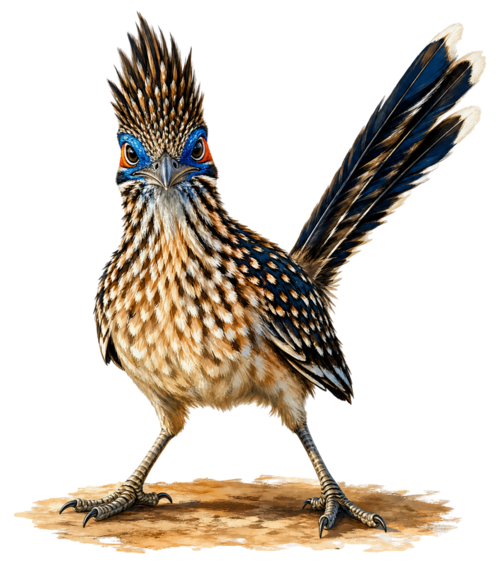
The Grumpy Roadrunner, giving you a hard look.
Rules & Respect

Things I didn't think I'd have to tell you.

I've lived out here my whole life. I've watched a lot of people come through. Most of them are fine. Some of them — and I mean this with the bare minimum of affection — are a lot.

These are the rules. Some of them are federal law. Some of them are just decency. I'm covering both because apparently that's where we are.

The ones that are somehow still a problem

Pack it out. You brought it in, you take it home. The granola bar wrapper. The orange peel. The water bottle you "accidentally" left at the overlook. All of it. "It's biodegradable" is not a reason — it's a sentence that tells me you've already decided. Take it with you.

Stay on the trail. The whole trail. Not 90% of it. The plants on either side of the path took years to get there and they will not be recovering from your shortcut. The trail exists because the damage is already done there. Everything next to it hasn't been damaged yet. Keep it that way.

Don't feed the wildlife. Not the ground squirrels. Not the ravens. Not the deer that walked up to you and looked friendly — she's not friendly, she's learned that humans carry food. A wild animal that associates people with food is an animal that's going to have a very short rest of its life. You are not helping. You are ending it slowly. Don't feed them.

Keep your dog on a leash. Even if he's "great with wildlife." The wildlife has not agreed to that assessment. Leash laws in parks and protected lands are real and enforced. If you're in a no-pets area, it means no pets. I don't make the rules — on this one I actually kind of do, and the answer is still no.

Don't take anything. Not rocks. Not flowers. Not feathers. Not the piece of ancient pottery you found near the ruin that you've already decided was "just sitting there." It was sitting there for a thousand years before you showed up. Leave it for the next thousand. It's also a federal crime. Both things are true.

The ones nobody told you — and you really needed to know

That dark bumpy crust between the rocks is alive. In desert environments, what looks like dirt is often cryptobiotic soil crust — a living layer of cyanobacteria, lichens, mosses, and fungi that holds the whole surface together. One footprint can destroy decades of growth. It doesn't look like anything important. It is the most important thing on the ground. Stay on rock or established trail when you're off the path.

Stop building cairns. Stacking rocks feels creative. It is not creative. It disrupts the ecosystem, moves habitat, and confuses hikers who use established cairns for navigation. The rocks were fine where they were. Put them back.

200 feet from water. For everything. Camping, washing dishes, brushing teeth, using soap — including the biodegradable kind — happens at least 200 feet from any lake, stream, or creek. That's roughly 70 adult steps. Biodegradable soap still damages aquatic systems. The 200 feet gives it time to filter before it reaches the water. Count the steps.

Wildlife viewing distances are real numbers. Every park has them. Check yours before you go — they vary. The general principle is this: if the animal has changed its behavior because you're there, you're already too close. Move back. An animal that feels cornered uses the energy it needs to survive just to deal with you. The photo isn't worth it.

Drones need permits. The answer is almost always no. In virtually every national park, flying a drone without a permit is illegal. The noise stresses wildlife, disturbs every other person in earshot, and can interfere with emergency aircraft. Look it up before you pack it. You will not like what you find, but better to find out at home.

Don't cut switchbacks. The switchback manages the grade of the slope. Cutting across it tears up vegetation, destabilizes the ground, and carves a new erosion channel every time someone follows you. Go the long way. That's why it's there.

Know the backcountry waste rules before you go. 200 feet from water, trails, and camp. Six inches deep. Toilet paper does not stay — you pack it out. In desert environments, some parks require you to pack out solid waste entirely with a WAG bag. Check the specific rules for where you're going. This is not a conversation you want to have for the first time on day three.

Wash the mud off your boots between parks. Invasive plants, chytrid fungus, and foreign soil travel on the bottom of your boots from one ecosystem to the next. Most trailheads have boot brush stations. Use them. What grows in Glacier has no business in the Mojave.

Use your headlamp's red mode at night. White light disrupts nocturnal animals and wipes out everyone's night vision. Most headlamps have a red setting. The dark out here is part of the point — especially in designated dark sky areas. Red mode on the trail. White light when you actually need it. Let your eyes adjust and you'll only need red mode outside or in the tent.

Sound carries further than you think. A canyon will take your conversation and deliver it clearly to someone a quarter mile away. The desert is quiet on purpose. Your playlist is not the ambient soundtrack everyone out here signed up for. Earbuds exist. Use them or don't bring the music.

Step off the trail when you stop. Need to check the map, take a photo, catch your breath? Move to the side first. Stopping in the middle of the trail means the people behind you have to go around you on terrain that wasn't designed for it. Two steps to the side. It takes less time than explaining this did.
The unwritten ones — which I really can't believe I'm covering

Uphill hikers have right of way. If you're going down and someone's coming up, you step aside. They're working harder and losing their rhythm is brutal. Horses have right of way over everyone — always. Step off the trail on the downhill side, stand still, and let them pass. Don't wave your arms.

Your dog's waste does not stay on the trail. Picking it up is the right move. Picking it up, tying the bag, and leaving it on the side of the trail to "grab on the way back" is not the right move. That is littering in a bag. It goes with you. The entire way back. In the bag.

The Bluetooth speaker. I don't know what to tell you. I've thought about it. I still don't know. Earbuds exist. Bone conduction headphones exist. The option to simply not have music exists. Whatever is playing, I promise you it is not improving the experience for the eleven other people who can hear it. Leave the speaker in the car.

Baby animals alone are not abandoned animals. The fawn sitting still in the meadow. The fledgling on the ground that can't quite fly yet. The baby jackrabbit crouched in the brush. None of them are abandoned. Mom is close by and watching. The moment you pick them up, you've created a problem that didn't exist ten seconds ago. Leave them alone.

Wildlife jams — be a decent person. When everyone pulls over for a bear and the road backs up for half a mile, the move is: stay near your car, keep your voice down, take your look, and move along. You are not the only one out here. The bear definitely knows that. You should too.

Hot springs are not pools. The crust around a thermal feature can be less than an inch thick over boiling water. It looks stable. It is not stable. People die in geothermal features every few years because they looked like something you could stand on or get into. You cannot. Stay on the boardwalk. Read the signs. This one is not worth testing.

Download your maps before you go. Cell service disappears fast out here — sometimes before you've even left the parking lot. Download offline maps at home. Tell someone where you're going and when you'll be back. Rangers spend real resources on rescues that started with "I thought I'd have signal." You won't always have signal. Plan accordingly.

That's it.

These are your lands. They belong to everyone — everyone who's here now, everyone who was here before, everyone who's coming after. Your job is simple: leave it the way you found it.

The Mojave has been doing fine for a long time without anyone's help. It just needs you not to make things worse. That's genuinely all it's asking.

See you out there.

— The Roadrunner

Companion reading: Desert Safety — what to know before you go →
